Learning CenterWhat is a mineral?The most common minerals on earthInformation for EducatorsMindat ArticlesThe ElementsThe Rock H. Currier Digital LibraryGeologic Time
搜索矿物的性质搜索矿物的化学Mineral Visual ExplorerAdvanced Locality Search随意显示任何一 种矿物Random Locality使用minID搜索邻近产地Search Articles搜索词汇表更多搜索选项
Mining Companies统计会员列表Mineral MuseumsClubs & Organizations矿物展及活动The Mindat目录表设备设置The Mineral QuizTime Machine
╳Discussions
💬 Home🔎 Search🚩 Flagged📅 LatestGroups
EducationOpen discussion area.Fakes & FraudsOpen discussion area.Field CollectingOpen discussion area.FossilsOpen discussion area.Gems and GemologyOpen discussion area.GeneralOpen discussion area.How to ContributeOpen discussion area.Identity HelpOpen discussion area.Improving Mindat.orgOpen discussion area.LocalitiesOpen discussion area.Lost and Stolen SpecimensOpen discussion area.MeteoritesOpen discussion area.Mineral ExchangesOpen discussion area.Mineral PhotographyOpen discussion area.Mineral ShowsOpen discussion area.Mineralogical ClassificationOpen discussion area.Mineralogy CourseOpen discussion area.MineralsOpen discussion area.Minerals and MuseumsOpen discussion area.PhotosOpen discussion area.Techniques for CollectorsOpen discussion area.The Rock H. Currier Digital LibraryOpen discussion area.Recent Images in Discussions


Generala question to a manager

9th Apr 2018 23:13 UTCDaniel Bennett OP
https://www.mindat.org/photo-876517.html
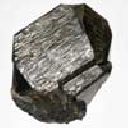
i uploaded this picture. for some reason it doesn't show up in the Montana minerals page. maybe because its either been misidentified or because the variety "babel" has not been added to the database yet for that location. in this case doesn't the image speak for itself as far as misidentification is concerned? does something like this need to be asked about or would it get approved/updated eventually without asking? also is there a better way to ask a question like this directly to ones in charge?
i uploaded this picture. for some reason it doesn't show up in the Montana minerals page. maybe because its either been misidentified or because the variety "babel" has not been added to the database yet for that location. in this case doesn't the image speak for itself as far as misidentification is concerned? does something like this need to be asked about or would it get approved/updated eventually without asking? also is there a better way to ask a question like this directly to ones in charge?

10th Apr 2018 01:45 UTCAmir C. Akhavan Expert
It is a public gallery image, despite the unfortunately very imprecise locality information "Montana".
That it didn't show up maybe just a cache clearing thing.
The surface pattern and odd angles indicate that the shape is caused by growth inhibition, I would consider "babel quartz" a misnomer.
That it didn't show up maybe just a cache clearing thing.
The surface pattern and odd angles indicate that the shape is caused by growth inhibition, I would consider "babel quartz" a misnomer.

10th Apr 2018 02:38 UTCErin Delventhal
Amir,
The page for babel quartz specifically describes the habit as a result of growth inhibition:
"A variety of quartz named for the fancied resemblance of the crystals to the successive tiers of the Tower of Babel. The morphology is caused by growth inhibition by other minerals (later dissolved)."
https://www.mindat.org/min-477.html
Does that need to be changed?
The page for babel quartz specifically describes the habit as a result of growth inhibition:
"A variety of quartz named for the fancied resemblance of the crystals to the successive tiers of the Tower of Babel. The morphology is caused by growth inhibition by other minerals (later dissolved)."
https://www.mindat.org/min-477.html
Does that need to be changed?
10th Apr 2018 03:09 UTCDaniel Bennett OP
Amir,
thanks for letting me know. I am new to uploading and I have yet to create a new location to mindat. for now as I get the hang of things I figured to put it there for simplicity( plus maybe for now I am not quite ready to reveal too much detail in a secret spot). that does bring up another question. can I narrow down the location later on down the road after I figure things out?
that's too bad about it being a misnomer. I felt excited to have contributed what I thought was a good example of babel-quartz. maybe one of the better. I do need to edit the info on it because it says 1.2 mm but its actually 12 mm field of view.
thanks for letting me know. I am new to uploading and I have yet to create a new location to mindat. for now as I get the hang of things I figured to put it there for simplicity( plus maybe for now I am not quite ready to reveal too much detail in a secret spot). that does bring up another question. can I narrow down the location later on down the road after I figure things out?
that's too bad about it being a misnomer. I felt excited to have contributed what I thought was a good example of babel-quartz. maybe one of the better. I do need to edit the info on it because it says 1.2 mm but its actually 12 mm field of view.
10th Apr 2018 05:49 UTCKeith Compton 🌟 Manager
Daniel
Should be no problem in making the locality more specific. Just follow the locality heirarachy for Montana, create the "new locality" and then edit the photo accordingly.
In answer to your question: "Is there a better way to ask a question like this directly to ones in charge?". Posting a question in the relevant message board will get a response. Equally, if you have a problem or wish to discuss something in more detail, click on the management member's name and you can contact them via their contact form.
Cheers
Should be no problem in making the locality more specific. Just follow the locality heirarachy for Montana, create the "new locality" and then edit the photo accordingly.
In answer to your question: "Is there a better way to ask a question like this directly to ones in charge?". Posting a question in the relevant message board will get a response. Equally, if you have a problem or wish to discuss something in more detail, click on the management member's name and you can contact them via their contact form.
Cheers

10th Apr 2018 11:31 UTCJolyon Ralph 🌟 Founder
There is a very good point about how to add a locality that you do not want to make public (yet).
How I would do it is to add something like.
Babel Quartz locality, XXX region/township, YYY Co., Montana, USA
In the description you should write that this was discovered by yourself and for the protection of the locality the exact point is not yet being revealed. However, assigning it to a region or township will make sure that in the future if someone else accidentally rediscovers your locality that they will know it's the same place.
How I would do it is to add something like.
Babel Quartz locality, XXX region/township, YYY Co., Montana, USA
In the description you should write that this was discovered by yourself and for the protection of the locality the exact point is not yet being revealed. However, assigning it to a region or township will make sure that in the future if someone else accidentally rediscovers your locality that they will know it's the same place.
10th Apr 2018 15:59 UTCDaniel Bennett OP
thanks for the answers. i only have one more question. is one manager better than others to contact? any question i have would probably relate to Montana in some way. i don't know who is a manager and who is a regular.
10th Apr 2018 22:26 UTCAmir C. Akhavan Expert
Erin Delventhal Wrote:
-------------------------------------------------------
> Amir,
> ...
> https://www.mindat.org/min-477.html
>
> Does that need to be changed?
Unfortunately I didn't even look at that page before I wrote a response.
Thanks for pointing this out.
Yes, it needs to be changed, and if it was only to explain that this English variety name is definitely not synonymous to the Swiss variety name. The meaning I know is crystals being tapered by consecutive alternating steps of rhombohedral and prismatic faces, and/or crystals tapered by a step-like development of parallel grown tips.
Ironically, Mineralienatlas has copied the Mindat definition and put an example computer rendering next to it that corresponds to the latter definition and not to the growth-inhibition type.
This kind of growth-inhibition is not uncommon in the Alps, btw., but the tapered crystals that match the Bere Alston type description are merely random products of the growth inhibition. If you look through the specimens from such a growth-inhibited pocket with some imagination, you will see "chicken, mice and elephant quartz", too, so to say. And I'm very reluctant to naming varieties by some random shapes occasionally observed. If the variety was called "chopped", "sliced", "stacked quartz" or whatever, that would be o.k., because that's what they all show.
On the other hand, if you opened a pocket with babel quartz specimens in the latter sense as depicted in the Mineralienatlas rendering, all crystals would show that step-like development with well-developed rhombohedral and prism faces, it is a systematic variation of their shape. You can start endless and tiring discussions about weather or not this is equivalent to or a variety of cathedral quartz...
-------------------------------------------------------
> Amir,
> ...
> https://www.mindat.org/min-477.html
>
> Does that need to be changed?
Unfortunately I didn't even look at that page before I wrote a response.
Thanks for pointing this out.
Yes, it needs to be changed, and if it was only to explain that this English variety name is definitely not synonymous to the Swiss variety name. The meaning I know is crystals being tapered by consecutive alternating steps of rhombohedral and prismatic faces, and/or crystals tapered by a step-like development of parallel grown tips.
Ironically, Mineralienatlas has copied the Mindat definition and put an example computer rendering next to it that corresponds to the latter definition and not to the growth-inhibition type.
This kind of growth-inhibition is not uncommon in the Alps, btw., but the tapered crystals that match the Bere Alston type description are merely random products of the growth inhibition. If you look through the specimens from such a growth-inhibited pocket with some imagination, you will see "chicken, mice and elephant quartz", too, so to say. And I'm very reluctant to naming varieties by some random shapes occasionally observed. If the variety was called "chopped", "sliced", "stacked quartz" or whatever, that would be o.k., because that's what they all show.
On the other hand, if you opened a pocket with babel quartz specimens in the latter sense as depicted in the Mineralienatlas rendering, all crystals would show that step-like development with well-developed rhombohedral and prism faces, it is a systematic variation of their shape. You can start endless and tiring discussions about weather or not this is equivalent to or a variety of cathedral quartz...
11th Apr 2018 08:20 UTCErik Vercammen Expert
Babel-quartz on Mindat: https://www.mindat.org/min-477.html.
I've read the name Muzo-habit for "crystals being tapered by consecutive alternating steps of rhombohedral and prismatic faces"
I've read the name Muzo-habit for "crystals being tapered by consecutive alternating steps of rhombohedral and prismatic faces"
11th Apr 2018 08:47 UTCJolyon Ralph 🌟 Founder
Amir C. Akhavan Wrote:
> Yes, it needs to be changed, and if it was only to
> explain that this English variety name is
> definitely not synonymous to the Swiss variety
I think you might be over-thinking this Amir.
The descriptions of 'Babel Quartz' I have seen in historical books only describe the appearance of stepped or stacked quartz. It doesn't specify that it has to have been formed by a particular method.
Having said this, I'm quite reluctant to have *modern* specimens classified under this name unless it's from a locality where this variety was noted in the historical record.
> Yes, it needs to be changed, and if it was only to
> explain that this English variety name is
> definitely not synonymous to the Swiss variety
I think you might be over-thinking this Amir.
The descriptions of 'Babel Quartz' I have seen in historical books only describe the appearance of stepped or stacked quartz. It doesn't specify that it has to have been formed by a particular method.
Having said this, I'm quite reluctant to have *modern* specimens classified under this name unless it's from a locality where this variety was noted in the historical record.
11th Apr 2018 09:33 UTCAmir C. Akhavan Expert
> It doesn't specify that it has to have been formed by a particular method.
The Mindat page did and that's what I didn't like about it.
Plus, and I stand by that, I wouldn't want to give random shapes varietal status, as explained above. And if someone else did and there is a nice literature reference, that still wouldn't make me adopt his/her terminology.
I would rather make babel quartz and many other varieties with multiple or fuzzy definitions not selectable.
I have no problem listing 10 different "definitions" of a term ("Some say this, some say that...") on a single page.
But as you know, I don't like "and/or definitions", like something is either x or y or z.
Or even worse, as we once had, "a is x or not x or y or not y or z or not z".
The Mindat page did and that's what I didn't like about it.
Plus, and I stand by that, I wouldn't want to give random shapes varietal status, as explained above. And if someone else did and there is a nice literature reference, that still wouldn't make me adopt his/her terminology.
I would rather make babel quartz and many other varieties with multiple or fuzzy definitions not selectable.
I have no problem listing 10 different "definitions" of a term ("Some say this, some say that...") on a single page.
But as you know, I don't like "and/or definitions", like something is either x or y or z.
Or even worse, as we once had, "a is x or not x or y or not y or z or not z".
11th Apr 2018 12:52 UTCJolyon Ralph 🌟 Founder
I agree about not making them selectable.
11th Apr 2018 16:17 UTCDaniel Bennett OP

i disagree about not making them selectable. how about properly defining them and rejecting or accepting them accordingly.
if babel quartz is supposed to come from the alps than lets say so in the definition.
I don't want to mislabel something I find and display.
Amir wrote "The meaning I know is crystals being tapered by consecutive alternating steps of rhombohedral and prismatic faces"
how is this not what we are looking at here? it doesn't seem all that random to me.
I have had a hard time finding any examples of babel quartz on the internet. please share some and show us the difference to clear this up. please don't take offense by my words. I am the ignorant one. I admit.
here is another example. I thought about just calling it a scepter or reverse scepter. would that be more correct.
if babel quartz is supposed to come from the alps than lets say so in the definition.
I don't want to mislabel something I find and display.
Amir wrote "The meaning I know is crystals being tapered by consecutive alternating steps of rhombohedral and prismatic faces"
how is this not what we are looking at here? it doesn't seem all that random to me.
I have had a hard time finding any examples of babel quartz on the internet. please share some and show us the difference to clear this up. please don't take offense by my words. I am the ignorant one. I admit.
here is another example. I thought about just calling it a scepter or reverse scepter. would that be more correct.
11th Apr 2018 17:16 UTCDaniel Bennett OP
I see the mindat definition of babel quartz just changed. now it says "or crystals tapered by a step-like development of parallel grown tips." now I am more confused. this sounds like a definition for cathedral quartz. mindat shows no specific images of cathedral quartz on the cathedral quartz page but on a google search they are common. not the same as babel(I wouldn't have thought).

11th Apr 2018 17:20 UTCDavid Von Bargen Manager
The photo above actually looks more like a reverse scepter.
11th Apr 2018 18:58 UTCDaniel Bennett OP

I agree we you. but the one babel quartz on mindat that's actually from Switzerland looks very similar to it. I hope someone has some other pictures of babel quartz to share.
here is a image cathedral quartz from majestic-quartz.com I found on google. very different from stepped babel quartz so I wonder if the mindat definition of cathedral quartz needs a little touch up.
here is a image cathedral quartz from majestic-quartz.com I found on google. very different from stepped babel quartz so I wonder if the mindat definition of cathedral quartz needs a little touch up.
12th Apr 2018 00:11 UTCDaniel Bennett OP

this is the closest I could find on the internet. from www.geoforum. some language I don't recognize so I have no info about it.
shouldn't this be babel quartz and the previous one cathedral?
it seems straight forward to me.
shouldn't this be babel quartz and the previous one cathedral?
it seems straight forward to me.
12th Apr 2018 00:21 UTCAmir C. Akhavan Expert
Yes, the photo shows what most people would call a cathedral quartz. Some, like me, understand babylon/babel quartz as a synonym, but I think cathedral quartz is a better name (it also sounds less esoteric). A Muzo habit does not show tower-like big steps, instead there are many very small steps, so the prisms look like flat faces with a strong parallel striation (although I also own a Muzo habit crystal with pronounced steps).
"Random" does not imply "odd". If a plane on a crystal is caused by growth inhibition by another crystal and coincides with a crystallographic axis it is still just as random and accidental a product as any other angle of intergrowth.
The first big step on your specimen does not match any regular crystal face on quartz, it appears to have been caused by growth inhibition by a slightly inclined, now dissolved crystal. Once the inhibiting crystals of the other mineral have dissolved, the quartz crystals may and often do continue to grow and typical quartz surface structures will appear again, as well as little tips that will merge into a single big tip. If there is not much growth, scars and imprints will remain on the quartz crystals and the faces will look a bit rough, sometimes even dull.
If I upload a "cathedral quartz" photo, I do not categorize it as a cathedral quartz myself and instead put a note in the caption, because these terms are fuzzy.
It's o.k. if one leaves it to the uploader to write in the caption what he thinks it is, the general audience gets an idea of how well-established or varied that term is or how consistently it is used. But if it is made a variety, it must be approvable, and then the definition must be strict, otherwise everybody will be confused. Varieties cannot be defined with the same rigor as minerals species, but some get pretty close (amethyst or smoky quartz, for example). The fuzzy ones as well as all the strange local, the "difficult" ones and even esoteric terms still deserve a description and that's why they are presented on Mindat, but they should not all be selectable as "mineral names" for photos of specimen.
As I said, I don't think shapes caused by a specific, yet accidental angle of intergrowth merit varietal status. It would be all different if there was some epitaxy, that is a systematic effect.
"Random" does not imply "odd". If a plane on a crystal is caused by growth inhibition by another crystal and coincides with a crystallographic axis it is still just as random and accidental a product as any other angle of intergrowth.
The first big step on your specimen does not match any regular crystal face on quartz, it appears to have been caused by growth inhibition by a slightly inclined, now dissolved crystal. Once the inhibiting crystals of the other mineral have dissolved, the quartz crystals may and often do continue to grow and typical quartz surface structures will appear again, as well as little tips that will merge into a single big tip. If there is not much growth, scars and imprints will remain on the quartz crystals and the faces will look a bit rough, sometimes even dull.
If I upload a "cathedral quartz" photo, I do not categorize it as a cathedral quartz myself and instead put a note in the caption, because these terms are fuzzy.
It's o.k. if one leaves it to the uploader to write in the caption what he thinks it is, the general audience gets an idea of how well-established or varied that term is or how consistently it is used. But if it is made a variety, it must be approvable, and then the definition must be strict, otherwise everybody will be confused. Varieties cannot be defined with the same rigor as minerals species, but some get pretty close (amethyst or smoky quartz, for example). The fuzzy ones as well as all the strange local, the "difficult" ones and even esoteric terms still deserve a description and that's why they are presented on Mindat, but they should not all be selectable as "mineral names" for photos of specimen.
As I said, I don't think shapes caused by a specific, yet accidental angle of intergrowth merit varietal status. It would be all different if there was some epitaxy, that is a systematic effect.
12th Apr 2018 00:30 UTCAmir C. Akhavan Expert

Second photo just posted: looks like "chopped/sliced" quartz from the Bor pit, Dalnegorsk.
Note: I call that simply growth-inhibited quartz.
Same cause, same locality, other specimen:
Would you call that Babel quartz, too?
Same specimen, different perspective:

Of course, there are specimens that are "chopped" along the c axis, too.
Many more odd-looking examples here: https://www.mindat.org/loc-4639.html
Note: I call that simply growth-inhibited quartz.
Same cause, same locality, other specimen:
Would you call that Babel quartz, too?
Same specimen, different perspective:
Of course, there are specimens that are "chopped" along the c axis, too.
Many more odd-looking examples here: https://www.mindat.org/loc-4639.html
12th Apr 2018 00:56 UTCDaniel Bennett OP
thank you Amir. that is enlightening. a new perspective for me. I do like those pictures you have pointed to. I don't like the word step to describe cathedral quartz because those "steps" are slanted. not good for walking.
12th Apr 2018 00:58 UTCKeith Compton 🌟 Manager
I always thought that babel in "babel quartz" referred to the dictionary definition of babel, being "confusing" i.e.: the structure of such Quartz specimens is odd and confusing and doesn't actually look like "normal" quartz (ie just quartz).
Definitely should not be a selectable term.
There will be too much arguement as to what is babel quartz and the like. Clearly, some of those photos above are simply sceptered or reverse sceptered.
I also disagree with the term "cathedral quartz". It's just quartz. ditto for alligator quartz, cactus quartz etc etc. At the end of the day they are just marketing ploys that have become " generally accepted" by some !!
Like Amir's "chopped quartz' - it's just an unusual looking quartz - very nice mind you, and interesting to understand how it formed, but it is not another variety, it's just quartz.
Definitely should not be a selectable term.
There will be too much arguement as to what is babel quartz and the like. Clearly, some of those photos above are simply sceptered or reverse sceptered.
I also disagree with the term "cathedral quartz". It's just quartz. ditto for alligator quartz, cactus quartz etc etc. At the end of the day they are just marketing ploys that have become " generally accepted" by some !!
Like Amir's "chopped quartz' - it's just an unusual looking quartz - very nice mind you, and interesting to understand how it formed, but it is not another variety, it's just quartz.
12th Apr 2018 01:10 UTCAmir C. Akhavan Expert
> I don't like the word step to describe cathedral quartz because those "steps" are slanted.
You are right, I often have difficulties finding the right words in English - it's not my mother tongue.
> Clearly, some of those photos above are simply sceptered or reverse sceptered.
To me, none of them are ;-)
You are right, I often have difficulties finding the right words in English - it's not my mother tongue.
> Clearly, some of those photos above are simply sceptered or reverse sceptered.
To me, none of them are ;-)
12th Apr 2018 01:21 UTCDaniel Bennett OP
I hear you. after finding something cool I want to call it something. not just quartz.
12th Apr 2018 01:31 UTCJolyon Ralph 🌟 Founder
There's no such thing as "just quartz". Quartz is an amazing mineral full of variety and surprises. Don't be afraid to call it what it is.

12th Apr 2018 05:44 UTCMark Heintzelman 🌟 Expert

Two Growth Interference Bor Quarry Quartz from my own collection. Can I call one "Girdle Quartz", and the other "Windswept Quartz"?
I have to agree with Amir on this one aspect. The term "Growth Interference" seems to me, covers all the possible consequences quite adequately. Best, because it's based on a solid principle of how these forms came into being. No need for fanciful, illusionary terminology based your own Mimetolithic perceptions, or whatever one particular shape or another happens to remind you of . . that practice could literally be never ending.
MRH
I have to agree with Amir on this one aspect. The term "Growth Interference" seems to me, covers all the possible consequences quite adequately. Best, because it's based on a solid principle of how these forms came into being. No need for fanciful, illusionary terminology based your own Mimetolithic perceptions, or whatever one particular shape or another happens to remind you of . . that practice could literally be never ending.
MRH

12th Apr 2018 11:14 UTCUwe Kolitsch Manager
Quartz is quartz is quartz ;-)
12th Apr 2018 15:17 UTCDaniel Bennett OP
maybe "growth-inhibited" ,"growth interrupted" could be added as a variety. that way it could be searched for in the database. what other places produce a lot of that kind of thing? obviously quartz is everywhere and it would take forever to try and look for more examples.
12th Apr 2018 15:24 UTCUwe Kolitsch Manager
"it could be searched for in the database"
It can be searched for by searching for specific words (or parts of words) in the photo caption (Advanced Search option).
Growth-inhibition can affect all kind of minerals; no need to add a corresponding quartz variety.
It can be searched for by searching for specific words (or parts of words) in the photo caption (Advanced Search option).
Growth-inhibition can affect all kind of minerals; no need to add a corresponding quartz variety.
12th Apr 2018 15:47 UTCDaniel Bennett OP
thanks that helped. it seems like Russia is the best location for that kind of thing. are there any other locations that come to mind that produce a lot of that? that maybe not mentioned as growth inhibited or interference? I am wondering now how rare growth inhibited quartz is.

12th Apr 2018 16:27 UTCScott Rider

In Colorado, I find a crystal that has been impacted by some other mineral every once in a while (growth inhibited). I'd say it is an uncommon phenomenon in Colorado. I'm not sure how common or uncommon it is around the rest of the world, but I have one from Washington (image attached), that is, according to the miner, very rare.... It is more of a reverse of babel quartz.
12th Apr 2018 16:42 UTCScott Rider
Using the name babel quartz is something I'd avoid, or cathedral, adventurine, or any other oddball names like that... Instead, I put names like the following: growth impacted/inhibited for the ones questioned in this topic; for cathedral, I use composite quartz; asparagus quartz = sprouting quartz; some of the smokies found in Colorado (aslo Alpine cleft type quartz especially) have interesting twinning and patterns on the prisms = macromosiac quartz, red stained quartz = iron-oxide stained quartz (Eisenkiesel); twisted twinned quartz along the c-axis = Gwindel, cubic shaped = pseudocubic, etc etc etc...
12th Apr 2018 19:01 UTCGregg Little 🌟
Epitaxy or homoepitaxy could cover a lot of the growth habits like cathedral, scepter, pineapple, sprouting, artichoke, etc, etc.
13th Apr 2018 02:24 UTCDoug Daniels
Mark, in your photo of two specimens maybe we could call the left-hand one accordian quartz. Just to toss another misnomer out there.
13th Apr 2018 03:38 UTCDoug Schonewald
I wish there were no option to choose a growth form or color phase of a mineral at all. Perhaps another menu within the photo information could allow choosing a growth form or color phase. In this case 'Quartz' would be the only mineral selection criteria. Once this is done another menu within the photo gives the options for color phases amethyst, citirine, etc. There could also be another menu for growth forms such as sceptre, chalcedony, Babylon/cathedral, tessin, cumberland, etc.This could appease those who wish to search by growth form and/or color phase. One of the major problems in Mindat is the poor descriptions in the photography text (indeed, if there is a description at all outside of photography equipment). Just my two cents (or pence) worth.
13th Apr 2018 05:37 UTCMark Heintzelman 🌟 Expert
Hmm, "Squeeze-box" quartz . . yeah, I kinda like that Doug!
And Douglas, you've hit on the real problem . . getting contributors to describe "at all' many of their contributions. The process had already been improved by adding more mandatory fields to fill out, in order to publish/contribute, but the more you add, the more cumbersome it gets to contribute, so there is a point of diminishing return to consider as well. I've personally no pressing issues, as viewing "Quartz" will lump them all together for viewing anyway. But the number of variables describing "just quartz" is getting more "largish" year on year.
And Douglas, you've hit on the real problem . . getting contributors to describe "at all' many of their contributions. The process had already been improved by adding more mandatory fields to fill out, in order to publish/contribute, but the more you add, the more cumbersome it gets to contribute, so there is a point of diminishing return to consider as well. I've personally no pressing issues, as viewing "Quartz" will lump them all together for viewing anyway. But the number of variables describing "just quartz" is getting more "largish" year on year.
13th Apr 2018 15:21 UTCDoug Schonewald
I've been guilty of using the selection box for different growth forms and different color phases myself. I've also been guilty of inadequate descriptions. I think that is true of all of us. I've simply started using The Quartz Page and Mindat to research color phases and growth forms and adding that to the descriptions. I find much of the rest of the internet to provide information that is often based on some magical properties or some ill conceived and non-scientific opinion. The only exception is peer reviewed papers.
13th Apr 2018 20:56 UTCDaniel Bennett OP
A historical name given for a variety of quartz named for the fancied resemblance of the crystals to the successive tiers of the Tower of Babel.
In some cases, but not all, the morphology is caused by growth inhibition by other minerals (later dissolved). In other cases it is crystals tapered by consecutive alternating steps of rhombohedral and prismatic faces, and/or crystals tapered by a step-like development of parallel grown tips.
above is the updated definition for babel quartz.
i see that https://www.mindat.org/photo-876517.html is removed from the babel quartz page.
i hear the reasons for not wanting to label growth inhibited quartz as Babel quartz.
what i don't understand now is why the the definition still reads like it does. simply asked what does qualify a specimen as Babel quartz really?
why is my specimen rejected but the new jersey one is ok? or the England one? or the Switzerland one? which one resembles the tower the most?
can someone add what historical locations qualify for Babel quartz.
i like that this is getting worked out and my specimen is not misnomered. but i hope for more consistency and a well defined definition of Babel quartz so it all correctly makes sense.
thank you
In some cases, but not all, the morphology is caused by growth inhibition by other minerals (later dissolved). In other cases it is crystals tapered by consecutive alternating steps of rhombohedral and prismatic faces, and/or crystals tapered by a step-like development of parallel grown tips.
above is the updated definition for babel quartz.
i see that https://www.mindat.org/photo-876517.html is removed from the babel quartz page.
i hear the reasons for not wanting to label growth inhibited quartz as Babel quartz.
what i don't understand now is why the the definition still reads like it does. simply asked what does qualify a specimen as Babel quartz really?
why is my specimen rejected but the new jersey one is ok? or the England one? or the Switzerland one? which one resembles the tower the most?
can someone add what historical locations qualify for Babel quartz.
i like that this is getting worked out and my specimen is not misnomered. but i hope for more consistency and a well defined definition of Babel quartz so it all correctly makes sense.
thank you
20th Apr 2018 18:14 UTCDaniel Bennett OP
i cant help but feel offended by this. the specimen I uploaded qualifies perfectly with the definition given by mindat for Babel-quart. and it was accepted as such until I asked a question about it. now it is removed without a reason given.
my attitude towards mindat suffers as well as my desire to share further uploads.
I ask that either
A. the specimen be put back to the babel page where it rightfully belongs.
B. the babel quartz definition be adjusted as needed if there is a mistake with it.(if wrongfully placed images are being removed than show consistency and remove all wrongfully placed images). (if only certain historical locations qualify than list them).
D. or the picture https://www.mindat.org/photo-876517.html be deleted from mindat because we are not in agreement.
new suggested definition of Babel-Quartz
"A historical name given for an "esoteric" variety of quartz named for the fancied resemblance of the crystals to the successive tiers of the Tower of Babel.
the morphology may be caused by growth inhibition by other minerals (later dissolved). or it is crystals tapered by consecutive alternating steps of rhombohedral and prismatic faces."
(parallel grown crystal tips describe a different variety[cathedral-quart]).
my attitude towards mindat suffers as well as my desire to share further uploads.
I ask that either
A. the specimen be put back to the babel page where it rightfully belongs.
B. the babel quartz definition be adjusted as needed if there is a mistake with it.(if wrongfully placed images are being removed than show consistency and remove all wrongfully placed images). (if only certain historical locations qualify than list them).
D. or the picture https://www.mindat.org/photo-876517.html be deleted from mindat because we are not in agreement.
new suggested definition of Babel-Quartz
"A historical name given for an "esoteric" variety of quartz named for the fancied resemblance of the crystals to the successive tiers of the Tower of Babel.
the morphology may be caused by growth inhibition by other minerals (later dissolved). or it is crystals tapered by consecutive alternating steps of rhombohedral and prismatic faces."
(parallel grown crystal tips describe a different variety[cathedral-quart]).
20th Apr 2018 18:38 UTCDaniel Bennett OP
if its too fuzzy than why is there a Babel-quartz page? why have a page that cant be defined?
I guess I don't like it being implied I made a mistake unless it can be shown to be true.
I guess I don't like it being implied I made a mistake unless it can be shown to be true.
版权所有© mindat.org1993年至2026年,除了规定的地方。 Mindat.org全赖于全球数千个以上成员和支持者们的参与。
To cite: Ralph, J., Von Bargen, D., Martynov, P., Zhang, J., Que, X., Prabhu, A., Morrison, S. M., Li, W., Chen, W., & Ma, X. (2025). Mindat.org: The open access mineralogy database to accelerate data-intensive geoscience research. American Mineralogist, 110(6), 833–844. doi:10.2138/am-2024-9486.
隐私政策 - 条款和条款细则 - 联络我们 - Report a bug/vulnerability Current server date and time: 2026.6.3 23:27:54
To cite: Ralph, J., Von Bargen, D., Martynov, P., Zhang, J., Que, X., Prabhu, A., Morrison, S. M., Li, W., Chen, W., & Ma, X. (2025). Mindat.org: The open access mineralogy database to accelerate data-intensive geoscience research. American Mineralogist, 110(6), 833–844. doi:10.2138/am-2024-9486.
隐私政策 - 条款和条款细则 - 联络我们 - Report a bug/vulnerability Current server date and time: 2026.6.3 23:27:54
Bor Pit, Dal'negorsk B deposit, Dalnegorsk, Dalnegorsk Urban District, Primorsky Krai, Russia