Learning CenterWhat is a mineral?The most common minerals on earthInformation for EducatorsMindat ArticlesThe ElementsThe Rock H. Currier Digital LibraryGeologic Time
搜索矿物的性质搜索矿物的化学Mineral Visual ExplorerAdvanced Locality Search随意显示任何一 种矿物Random Locality使用minID搜索邻近产地Search Articles搜索词汇表更多搜索选项
Mining Companies统计会员列表Mineral MuseumsClubs & Organizations矿物展及活动The Mindat目录表设备设置The Mineral QuizTime Machine
╳Discussions
💬 Home🔎 Search🚩 Flagged📅 LatestGroups
EducationOpen discussion area.Fakes & FraudsOpen discussion area.Field CollectingOpen discussion area.FossilsOpen discussion area.Gems and GemologyOpen discussion area.GeneralOpen discussion area.How to ContributeOpen discussion area.Identity HelpOpen discussion area.Improving Mindat.orgOpen discussion area.LocalitiesOpen discussion area.Lost and Stolen SpecimensOpen discussion area.MeteoritesOpen discussion area.Mineral ExchangesOpen discussion area.Mineral PhotographyOpen discussion area.Mineral ShowsOpen discussion area.Mineralogical ClassificationOpen discussion area.Mineralogy CourseOpen discussion area.MineralsOpen discussion area.Minerals and MuseumsOpen discussion area.PhotosOpen discussion area.Techniques for CollectorsOpen discussion area.The Rock H. Currier Digital LibraryOpen discussion area.Recent Images in Discussions


GeneralRuby Star Sapphire...natural or not?

17th Jan 2014 06:06 UTCKit Warner OP

My husband bought this while in Viet Nam many years ago, is there any way for us to tell if it's natural other than taking it to someone? When I look at it through a jewelers glass I can see a lot of tiny dark specks and a few inclusions. The star does move with the light and is not perfect. I know that there are lots of them that are man made, so was wondering about this one, thanks!



17th Jan 2014 13:01 UTCRock Currier Expert
How much did you pay for the stone? Its probably synthetic, but its impossible to say for sure from the photo.

17th Jan 2014 15:25 UTCWilliam C. van Laer Expert
Kit:
It has an obvious flaw that clearly shows it is natural. Synthetic stones are FLAWLESS.
Chris
It has an obvious flaw that clearly shows it is natural. Synthetic stones are FLAWLESS.
Chris

21st Jan 2014 11:43 UTCPeter Slootweg 🌟
It looks synthetic to me. The rays of the star are very thin and sharp. The bottem of the stone looks perfectly flat to me. That is a hallmark of synthetic star stones.
Many people believe that synthetic stones are perfect. That's why these stones are treated to create imperfections to simulate natural stones.
The fact that you bought in Vietnam near the source makes it extra suspicious.
So based on the pictures i would say, Synthetic.
Peter
Many people believe that synthetic stones are perfect. That's why these stones are treated to create imperfections to simulate natural stones.
The fact that you bought in Vietnam near the source makes it extra suspicious.
So based on the pictures i would say, Synthetic.
Peter

21st Jan 2014 15:20 UTCStephanie Martin
Hi Kit,
To me it looks like a natural stone that has been treated, this is common. For enhancing the "star", known as asterism, the most likely treatment is diffusion:
Diffusion: The use of chemicals in conjunction with high temperatures to product color and/or asterism-producing inclusions.
taken from the enhancement code list from Alpine Gems (could not find a definition on gemdat or mindat).
http://alpinegems.ca/catalogue.html
regards,
stephanie :-)
To me it looks like a natural stone that has been treated, this is common. For enhancing the "star", known as asterism, the most likely treatment is diffusion:
Diffusion: The use of chemicals in conjunction with high temperatures to product color and/or asterism-producing inclusions.
taken from the enhancement code list from Alpine Gems (could not find a definition on gemdat or mindat).
http://alpinegems.ca/catalogue.html
regards,
stephanie :-)

21st Jan 2014 19:39 UTCA. M.
I have a similar red-colored star corundum, my is not synthetic, it was probably enhanced, the imperfections are evident under magnification.
21st Jan 2014 22:19 UTCKit Warner OP

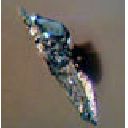
Thanks everyone...still confused...so I took some of the back with sunlight on it. Seems a little uneven, see what you think now...maybe this will tell?


22nd Jan 2014 17:08 UTCOwen Lewis
Kit,
The stone has been cut and polished. Accordingly, 'the flat back of it' gives no information on its origins. I agree with Stephanie and others that your piece has geological origins. As to whether or not it has been treated for enhancement, I'm not prepared to guess off the photos.
Whatever, it's nice! Enjoy :-)
The stone has been cut and polished. Accordingly, 'the flat back of it' gives no information on its origins. I agree with Stephanie and others that your piece has geological origins. As to whether or not it has been treated for enhancement, I'm not prepared to guess off the photos.
Whatever, it's nice! Enjoy :-)
25th Jan 2014 03:54 UTCA. M.
When I look at the stone on the polished/star side with a lens I can see a pattern of concentric formations - the stone was produced by cutting across the corundum crystal, perpendicular to its c-axis.
Sofia
Sofia
25th Jan 2014 11:45 UTCOwen Lewis
ATS,
Are you talking about your own stone of the pics that Kit put up here? If the latter, I can see no 'concentric rings' in Kit's pics (nor, given the low level of definition and the lighting, would I expect to be able to do so).
Where present, I'd say that curved growth lines in corundum were diagnostic for corundum produced by the flame fusion process. In geologically produced corundum - and also in flux grown and some other synthetic production, one would expect to see straight growth lines intersecting at the expected 120 deg angle.
Are you talking about your own stone of the pics that Kit put up here? If the latter, I can see no 'concentric rings' in Kit's pics (nor, given the low level of definition and the lighting, would I expect to be able to do so).
Where present, I'd say that curved growth lines in corundum were diagnostic for corundum produced by the flame fusion process. In geologically produced corundum - and also in flux grown and some other synthetic production, one would expect to see straight growth lines intersecting at the expected 120 deg angle.
26th Jan 2014 04:13 UTCKit Warner OP

OK...thanks everyone...& promise these will be the last pictures! lol I took them at night with flashlight, some pretty odd, you can see some of the dark specks & the bright spots that are in the stone...plus something new I've not noticed because the stone is naturally darkish...there seems to be an "extra" star thing on the side and sort of two different colors in the stone. Since it's by "flashlight" the color of the stone has a more bluish color than purple. Maybe, at least, this will help in future ID of other stars as to their being "natural" or man made..?


26th Jan 2014 05:32 UTCA. M.
I meant my stone, straight lines. I cannot see what's on Kit's too well...
Sofia
Sofia
版权所有© mindat.org1993年至2026年,除了规定的地方。 Mindat.org全赖于全球数千个以上成员和支持者们的参与。
To cite: Ralph, J., Von Bargen, D., Martynov, P., Zhang, J., Que, X., Prabhu, A., Morrison, S. M., Li, W., Chen, W., & Ma, X. (2025). Mindat.org: The open access mineralogy database to accelerate data-intensive geoscience research. American Mineralogist, 110(6), 833–844. doi:10.2138/am-2024-9486.
隐私政策 - 条款和条款细则 - 联络我们 - Report a bug/vulnerability Current server date and time: 2026.6.3 23:19:04
To cite: Ralph, J., Von Bargen, D., Martynov, P., Zhang, J., Que, X., Prabhu, A., Morrison, S. M., Li, W., Chen, W., & Ma, X. (2025). Mindat.org: The open access mineralogy database to accelerate data-intensive geoscience research. American Mineralogist, 110(6), 833–844. doi:10.2138/am-2024-9486.
隐私政策 - 条款和条款细则 - 联络我们 - Report a bug/vulnerability Current server date and time: 2026.6.3 23:19:04